
When people think about tax season, they usually picture the frantic rush of March and April. But here is a well-kept industry secret: the most impactful tax planning can happen in October.
My Professional Accounting Resource
We are pleased to provide a variety of resources on accounting and assurance, financial planning, retirement and other related subjects that we hope will be helpful to both individuals and businesses.
Have a question that isn’t answered here? We can help. Simply contact us by email or give us a call at 416-347-3993. We would be happy to meet with you for a free, no-obligation consultation.
Disclaimer:
The content provided on this website is for general informational purposes only and is not intended as professional accounting, tax, or financial advice. While efforts are made to ensure the accuracy and timeliness of the content, errors or omissions may occur. The content does not constitute a client-advisor relationship. Readers should consult with a Chartered Professional Accountant or other financial professional for advice tailored to their specific needs. We are not liable for any actions one might take based on the information provided on this website.


A registered education savings plan (RESP) can be a great way to save for your child’s education, especially with government grants and tax-sheltered growth. But one question that can make parents hesitate to open one:

As summer rolls along, mid-year is the ideal time to step back, evaluate your business performance, and fine-tune your tax strategy. Waiting until December—or worse, tax filing season in the spring—limits your options and often leaves money on the table.

As families gear up for another school year, back-to-school preparations usually focus on buying supplies, purchasing new clothes, and arranging tuition payments. However, August is also an ideal time to focus on strategic tax planning. Taking proactive steps now can significantly lower your family’s tax burden and stretch your education savings further as fall approaches.

In Canada, a cottage or vacation property can qualify for the principal residence exemption (PRE), but the rules are more nuanced than many owners expect.

The Canada Revenue Agency pays close attention to vacation and cottage properties because they commonly involve:

If your vacation property earns rental income — even occasionally — you can generally deduct reasonable expenses incurred to earn that income. The rules depend heavily on whether the property is primarily personal-use, primarily rental-use, or mixed-use.

Owning a vacation property can create several tax issues that are easy to overlook in Canada. A consultation with a CPA or tax advisor is a wise decision if any of the following apply:

It is a common panic moment, but don't worry—people realize they made mistakes on their taxes all the time.

For high-net-worth individuals and families in Canada, working with a wealth manager or financial planner goes beyond investment selection. It involves coordinating taxes, structure, risk, and long-term legacy planning.

In Canada, the split between registered and non-registered (taxable) accounts is one of the most important structural decisions you’ll make as an investor. It determines how much tax you pay, when you pay it, and how flexible your money is.

It is that time of year when focus turns to filing an annual tax return. To make sure you have a grasp on your situation, we have provided a practical overview of how investments are taxed in Canada. The following focuses on what affects your returns and therefore, your decisions to preserve your wealth.
Given any number of variables, everyone's situation can be different, so it is vitally important that you contact our office before you file your return to make sure you are not paying too much tax.

By splitting income with a spouse, the higher income taxpayer can reduce net income and taxable income. Here’s a clear comparison of pre-retirement vs. post-retirement income splitting in Canada, focusing on how the rules, flexibility, and tax savings differ.

Income splitting is a tax planning strategy in Canada that allows higher-income earners to shift certain types of income to lower-income family members, reducing the overall family tax bill.

There are personal tax implications to take into consideration when moving to Canada in 2026. Based on how the Canadian tax system treats people who come (or return) to live here, we'll focus on residency, what you must report, tax on worldwide income, foreign credits, and other key effects.

There are a few important tax implications to be aware of if you are moving within Canada. Here’s a practical breakdown of what happens when you move within Canada in 2026.

Here is a current summary of notable provincial and territorial tax and related fiscal changes affecting Canadian taxpayers in 2026 based on the most recent available reporting and tax guides. Where detailed provincial 2026 budgets or official bulletins were available, changes or trends are emphasized. Note: many provinces primarily rely on indexation of existing tax brackets and credits for inflation, rather than broad structural rate changes. (Canada)

Here’s a structured and current overview of the major federal tax changes affecting Canadian taxpayers in 2026 based on the latest government measures, and reliable reporting as referenced in brackets (Source). We also have included a comparative summary of major federal tax settings for Canadian taxpayers in 2025 vs. 2026, focusing on changes that affect individuals.

With potential changes to tax rates on the horizon, both individuals and business owners are encouraged to undertake a thorough review of their tax positions before the December 31, 2025, deadline. Proactive planning can help identify opportunities to optimize tax outcomes and manage obligations effectively.

The following summary outlines year-end tax planning considerations for home buyers and owners, families with students, family members with disabilities, and individuals making gifts. As the December 31 year-end approaches, reviewing personal financial circumstances can help ensure that available tax planning opportunities are utilized effectively.

Tax planning should be a year-round affair, but as year-end approaches, now is a particularly good time to review your personal finances and take advantage of any tax planning opportunities that may be available to you before the December 31st deadline. As we enter the final weeks of 2025, here are some tax tips you may wish to consider.

Small Canadian Accounting Firms have come to utilize these AI Tools for your benefit. The following are widely used, cost-effective, and directly relevant to Canadian compliance and client service:

Artificial Intelligence (AI) isn’t just for big companies anymore. Today, even small and mid-sized accounting firms in Canada are using AI-powered tools to make their work faster, smarter, and more reliable. What does that mean for you as a client? Better service, fewer delays, and more time spent on personalized advice.

In Canada, accountants are very aware that AI must be used carefully, since it involves sensitive client data, CRA compliance, and professional obligations under CPA Canada standards. Firms (even small ones) are putting safeguards in place to make sure AI enhances service without compromising privacy, security, or ethics.
Here’s how Canadian accounting practices are protecting clients when using AI:

In Canada, smaller accounting firms are beginning to use AI in practical, cost-effective ways that help them compete with larger firms. Unlike the Big Four (who are investing billions in custom AI systems), small and mid-sized firms typically adopt affordable, cloud-based AI tools built into accounting software and apps. Here’s how they’re doing it:

It seems that there are daily news stories about someone losing thousands or even millions of dollars through fraudulent deepfake schemes.

If you haven’t filed your tax return for a few years in Canada, it’s important to act quickly to minimize penalties, interest, and potential legal issues. While we will deal with income tax returns, other returns can include GST/HST Returns and others.

Even though each person must still file separately, here's what you need to know:

Income splitting with a spouse is a tax strategy that can help reduce your overall family tax bill. Here's why it’s beneficial in Canada:

Here are some summer tax tips for Canadians to help you stay ahead of the game—even when the sun’s out and taxes seem far away:

Here are Canadian tax tips for new residents and immigrants filing their first income tax return:

Here are essential tips for Canadian first-time income tax filers to help navigate the process smoothly:

During this busy tax season, CRA scams (Canada Revenue Agency) are unfortunately common, and scammers have gotten more sophisticated over the years. But with a few solid practices, you can protect yourself effectively.

The loss of a job is one of the toughest situations one could ever have to deal with in life. The uncertainty in today’s political environment has many Canadians on edge. From an income tax perspective, here is how job loss could affect your situation.

In 2025, several income tax changes in Canada will affect seniors. Here are five key updates:

In Canada, organizing your information for income tax filing is crucial to ensuring accuracy and maximizing deductions. Here’s the best way to save and manage your tax-related documents:
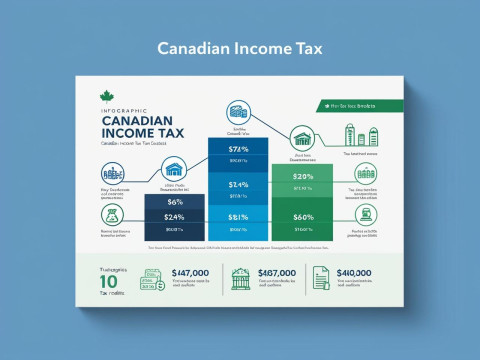
Canadian income tax is getting more complicated every year. The following outlines ways to minimize your taxes which may save you money!

Personal taxes in Canada are based on a progressive tax system, meaning the more you earn, the higher percentage of tax you pay. Here’s a general breakdown of how the system works: